
It’s 4am on the 38th floor of one of the world’s largest law firms; I’m working in their best department, surrounded by partners making three and four million dollars a year. I’m already earning several hundred thousand and,
But close enough that I start Googling, searching for something—anything—that will make sense of the feeling that I am succeeding in all the wrong ways.
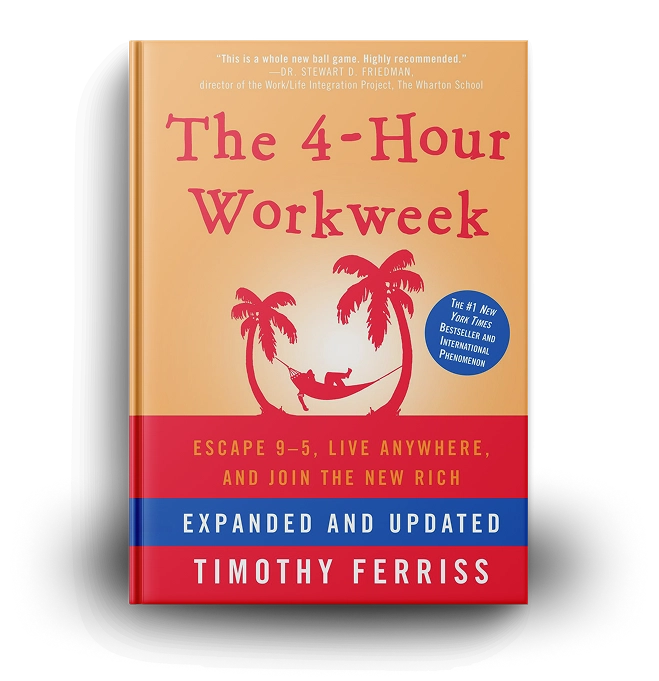
Up comes The Four Hour Work Week—a book that opened me to taking an alternative path—and more importantly, a question I’d spend the next fifteen years answering:
I’ve been solving problems my whole life. I grew up in a high-conflict household.
As a survival skill, I learned to read a room in microseconds—to predict the unpredictable, to see what was coming before anyone else.
What I didn’t realize was that I was developing a skill that would become the foundation of everything I do: I can solve any problem I face.
—third marriages, estranged kids, one week a year in France spent working from a hotel room— to succeed in a singular domain.
So I walked away. I wanted worthier problems.
I go all-in as a partner in a fashion brand, with a boutique and spa in Charleston.
Try to mitigate every possible partnership disaster you can imagine. Deal with employees who won’t come around the register when mercury is in retrograde. Everything that can go wrong, does.
My father was a strong amateur pool player, and pros would stay at our house when they came through Baltimore. One of my closest friends is a multi-time world champion.
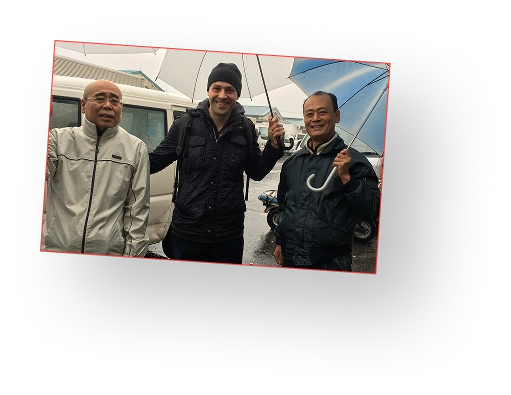
In 2016, he invites me to Osaka for a tournament. I buy a one-way ticket.
I end up staying with my friend’s sponsor, a company that makes 80% of the world’s pool cue tips. The owner and I stay up many nights drinking sake and talking business.
I want it, very much. But in Japan, I will always be an outsider; it’s devastatingly lonely. So I return to America completely unmoored. I’d just walked away again. Having destroyed and rebuilt myself so many times, I wasn’t sure what held me all together anymore.
I turn to my oldest friends—people who’d known me for twenty years—and ask them: Who am I to you? What do I do for you?
The answer comes back over and over: “You’re the one I call when I don’t know who else to call.” And: “You think differently than anyone I’ve ever met.”
That’s when it clicks.
Everything—the hypervigilance, the legal training, the failures, the cross-cultural lens—it all came together around one thing:
When the deal closes, my bank account gains several digits more than I’ve ever had before.
But it is not a win in the way I expected.
Over the years, many questioned my career decisions, and I think the sale of my company is going to make me feel vindicated. Instead, it makes me realize: it was never them I wanted to prove myself to. It was always me.
One of my mantras is “You’re not obligated to complete the work, but neither are you free to abandon it.”
Not trying to win finite victories, but to play in a way that people I respect will invite me to keep playing with them.
If you’re solving for the right things with people you respect—walk that direction—that’s a good life.
Darren Frank works with CEOs and founders navigating moments where the stakes are high and the old rules no longer apply.
He helps leaders make better decisions under pressure when certainty isn’t available. Not through answers or playbooks. But through operating principles for how to think, decide, and lead as complexity, responsibility, and consequence increase.
Darren’s work is informed by experience across law, entrepreneurship, and leadership. He began his career in law, where he learned to think carefully about risk, consequence, and long-term impact. He later became a founder himself, co-founding Infusive, a company that helps wellness brands grow through a differentiated supply chain solution.
Working inside growing businesses showed Darren how leadership changes as success compounds. Decisions affect more people. Mistakes are harder to unwind. And choices made under pressure quietly shape culture and the future of the business.
Today, Darren works privately and selectively with CEOs and founders during periods of growth, transition, or uncertainty. His work helps leaders think clearly, lead well, and build success that holds up over time.
Are you at a moment without a playbook?
If you want to understand how this work helps you think clearly and navigate uncertainty when the stakes are high…